



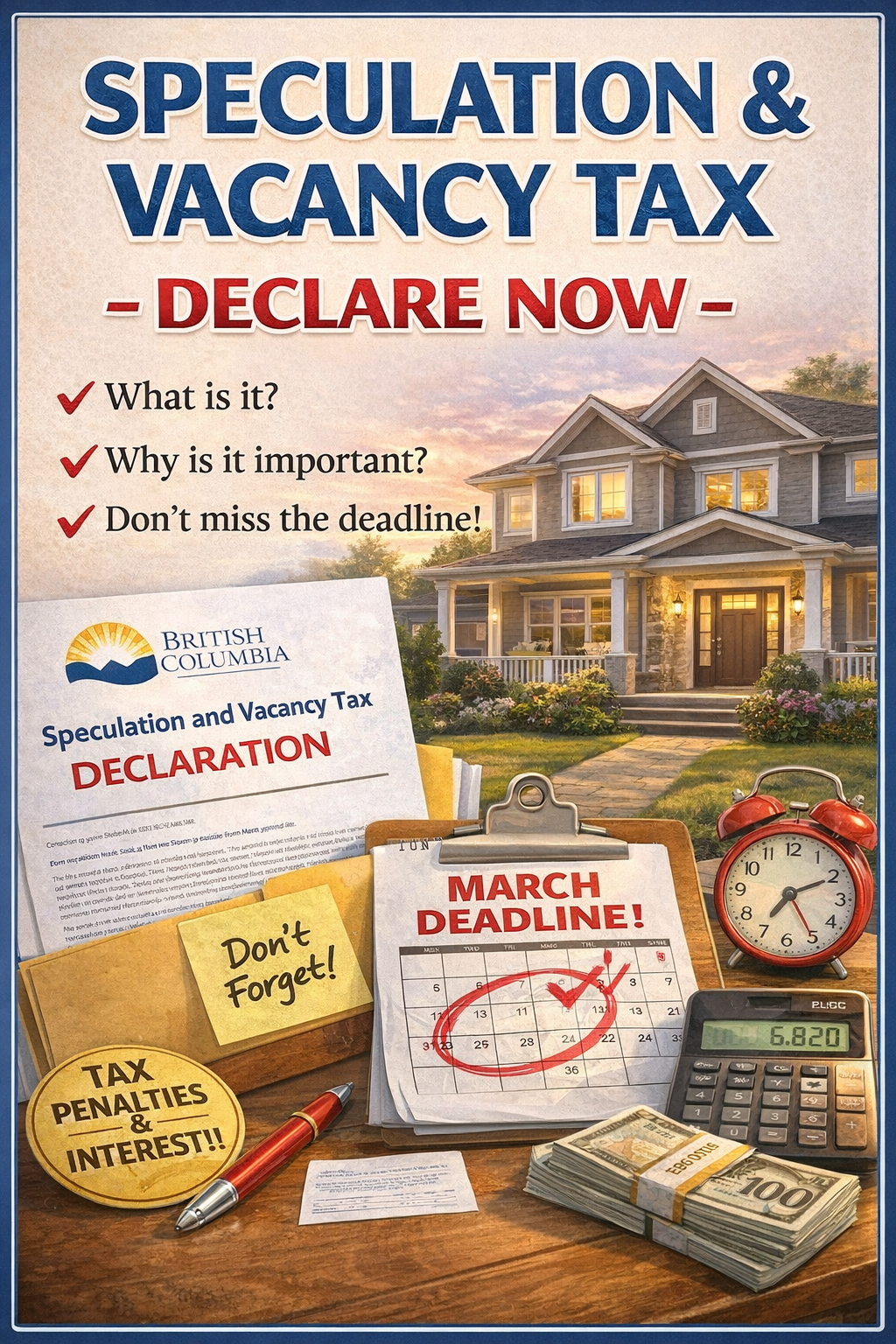
What Is the Speculation & Vacancy Tax?
The Speculation and Vacancy Tax is a provincial tax created to discourage empty homes in high-demand housing areas and encourage housing to be occupied by residents rather than sitting vacant.
It applies to residential properties in designated regions of British Columbia, including:
-
Metro Vancouver
-
Fraser Valley (including Surrey, Langley, and Abbotsford in many areas)
-
Capital Regional District
-
Kelowna, Nanaimo and several other communities
The tax is not based on selling your home or owning multiple properties — it’s based on how the property is used.
The Most Important Part:
You Must Declare Every Year
Even if:
-
you live in your home
-
you only own one property
-
you have no intention of selling
-
you definitely do not owe tax
You still must complete the declaration annually.
This is where many people get caught.
The Province does not automatically assume your home is your principal residence.
They require confirmation every year.
If you don’t declare → the system assumes the property is vacant → tax is applied automatically.
What Happens If You Miss the Deadline?
If you don’t submit your declaration:
-
The property is deemed taxable
-
You can be charged the Speculation & Vacancy Tax
-
Penalties and interest may be added
-
It becomes much harder to reverse later
For many homeowners this can mean a bill for thousands — sometimes tens of thousands — of dollars, even when they actually live in the home full-time.
Do Most Homeowners Actually Pay the Tax?
No.
Most homeowners qualify for an exemption, including:
-
principal residences
-
long-term rentals
-
many family occupancy situations
But again — you only receive the exemption if you declare.
Why You’re Receiving the Letter
Each registered owner receives their own declaration letter with a unique declaration code.
This is important:
If a property has two owners (for example spouses), both must complete their own declaration separately.
One declaration does not cover both owners.
How to Declare
Declaring only takes a few minutes and can be done:
-
online
-
by phone
You will need:
-
your letter
-
your declaration code
-
your SIN (for identity confirmation only)
Don’t Ignore It
Many people mistake the letter for junk mail, a sales notice, or assume their accountant handles it automatically.
It is not handled through your property taxes or income taxes — it is a completely separate provincial declaration.
The Bottom Line
This tax does not affect most homeowners financially — but failing to declare absolutely can.
Even if you’re 100% certain your home is your principal residence, you still need to complete the declaration every year before the deadline.
A two-minute task can prevent a very stressful and expensive surprise later.
If you’re unsure whether your property might be affected, feel free to reach out — I’m always happy to point you in the right direction or help you determine whether you should be concerned.


